Instructional design impacts student learning in many ways. According to Teaching Models: Designing Instruction for 21st Century Learners, “Instructional design (sometimes called instructional systems design) is a systematic and scientific approach for designing instruction and creating instructional materials.” Milman, Natalie B., Kilbane, Clare R. Teaching Models: Designing Instruction for 21st Century Learners.. [Yuzu]. This requires teachers to approach their lessons as “educational designers.” Teachers must not only plan lessons that effectively meet objectives, but also integrate tools that are available to engage all learners. It means that teachers must implement various instructional models depending on the content they are teaching.
In the 21st Century classrooms I have observed, it is evident which teachers approach their job as educational designers. These teachers have taken the time and effort to use a “backward approach” to planning. They have first thought about the goals and objectives, then reflected on the instructional model that is most appropriate. They have not only planned high-quality resources, but also integrated technological tools to enhance the lessons. These are teachers that make a conscious effort to differentiate the instruction so that all learners are engaged and can benefit from the lesson. By familiarizing ourselves with the instructional design process, we can be better equipped to meet the needs of 21st Century Learners.
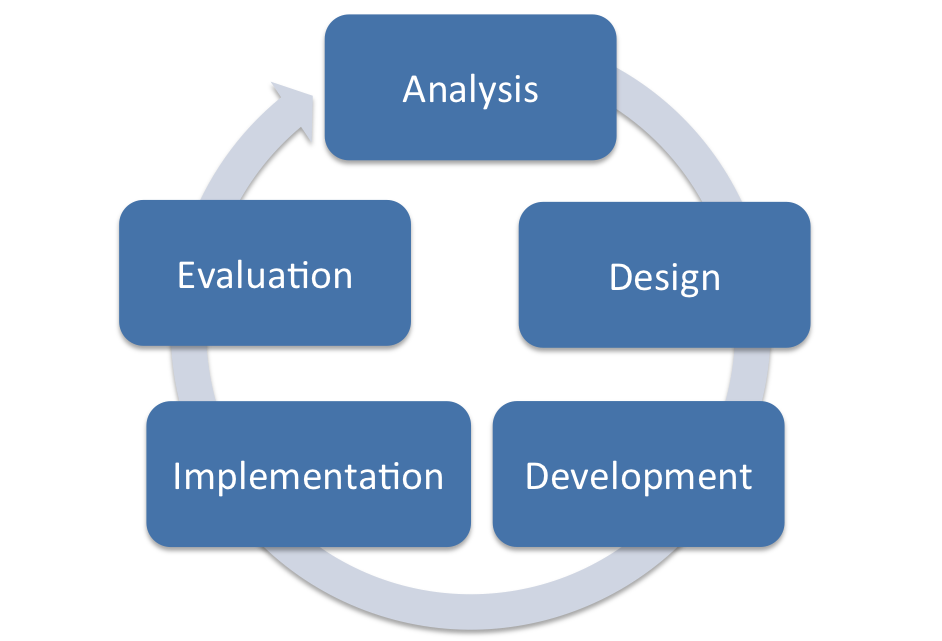 |
| The ADDIE model of instructional design - used from Educational Technology.net https://educationaltechnology.net/the-addie-model-instructional-design/ |


No comments:
Post a Comment